From dark stars to a photograph
An idea in a letter in 1783 took more than two centuries to become a picture.
How this site works. Every fact is in our own words and linked to its source, beside it. Where good sources disagree, we show each version in a “Sources differ” box.
John Michell’s dark stars
In 1783 the clergyman and astronomer John Michell described ‘dark stars’ whose light could not reach us, in a letter to Henry Cavendish that the Royal Society published. Royal Society
He worked out that a star as dense as the Sun but more than 500 times as wide would hold in its own light. Royal Society
He suggested that such a hidden body might still be found from the movements of bright bodies circling it. Royal Society
His idea was published more than 130 years before Einstein’s theory of gravity. Royal Society
Michell never used the words ‘black hole’, and nor did Einstein. Royal Society
Michell (1724–1793) was a British geologist and astronomer, counted among the fathers of seismology, the science of earthquakes. Britannica
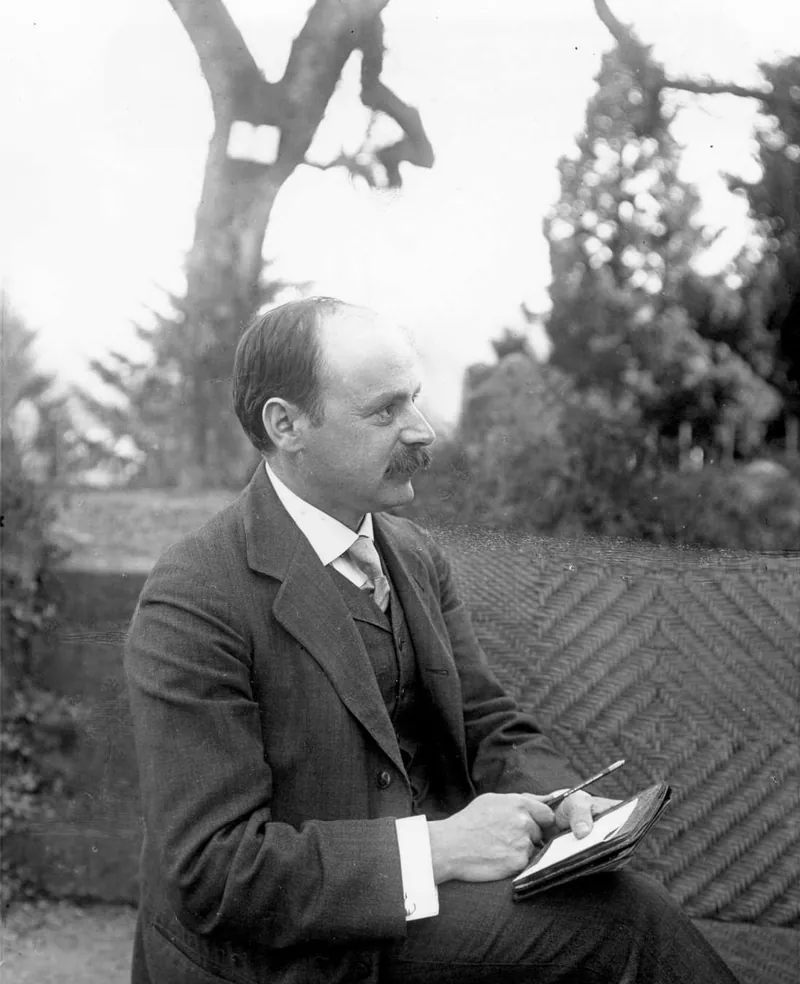
Karl Schwarzschild
Schwarzschild found the first exact solution of Einstein’s equations of gravity, and laid the foundation of black hole theory. Britannica
In 1916 Karl Schwarzschild predicted that there could be collapsed stars that give out no radiation. Britannica
Schwarzschild was born in Frankfurt am Main in 1873 and died in Potsdam on 11 May 1916, after falling fatally ill while serving in the German army in the First World War. Britannica
Einstein’s doubts and Penrose’s proof
Einstein himself did not believe that black holes really exist. Nobel Prize, 2020
In January 1965, ten years after Einstein’s death, Roger Penrose proved that black holes really can form, and described them in detail. Nobel Prize, 2020
Penrose’s article is still regarded as the most important contribution to general relativity since Einstein. It won him half of the 2020 Nobel Prize in Physics. Nobel Prize, 2020
Who named them?
The name “black hole”: sources differ in what they say
- The Royal Society says the term ‘black hole’ was coined by the American physicist John Archibald Wheeler in 1967. Royal Society
- Britannica says Wheeler popularised the term black hole. Britannica
The Royal Society says Wheeler coined it; Britannica says he popularised it. Both put the name with Wheeler.
Wheeler (1911–2008) studied with Niels Bohr in Copenhagen and joined Princeton University in 1938. Britannica
With Charles Misner and Kip Thorne he wrote Gravitation (1973), a major textbook on Einstein’s relativity. Britannica
Stephen Hawking
The physicist Stephen Hawking proposed that black holes also slowly shrink, because they lose tiny amounts of energy, now called Hawking radiation. NASA, 10 questions
For most black holes we know about, shrinking noticeably would take much longer than the entire age of the universe. NASA, 10 questions
Hawking also proposed that many tiny primordial black holes, perhaps no heavier than an asteroid, might have formed in the Big Bang. Britannica
Stephen Hawking lost a bet, first placed in 1974, that Cygnus X-1 did not contain a black hole. NASA Chandra, 2011
Bigger and bigger
Even bigger black holes, about 10 billion Suns each, are inferred at the centres of the nearby galaxies NGC 3842 and NGC 4889. Britannica
Timeline
- 1783 In 1783 the clergyman and astronomer John Michell described ‘dark stars’ whose light could not reach us, in a letter to Henry Cavendish that the Royal Society published. Royal Society
- 1916 In 1916 Karl Schwarzschild predicted that there could be collapsed stars that give out no radiation. Britannica
- January 1965 In January 1965, ten years after Einstein’s death, Roger Penrose proved that black holes really can form, and described them in detail. Nobel Prize, 2020
- 1967 The Royal Society says the term ‘black hole’ was coined by the American physicist John Archibald Wheeler in 1967. Royal Society
- 1971 Cygnus X-1, discovered in 1971, is a blue supergiant star and an invisible companion, a black hole, orbiting each other every 5.6 days. Britannica
- 1974 Russell Hulse and Joseph Taylor’s pulsar, found in 1974, showed indirectly that gravitational waves exist, and won them the 1993 Nobel Prize in Physics. LIGO, 2016
- 14 September 2015 On 14 September 2015 gravitational waves were observed for the very first time. They came from a collision between two black holes. Nobel Prize, 2017
- 10 April 2019 On 10 April 2019 the Event Horizon Telescope team revealed the first direct visual evidence of a supermassive black hole and its shadow. ESO, 2019
- 12 May 2022 On 12 May 2022 astronomers unveiled the first image of Sagittarius A*, made by the Event Horizon Telescope. ESO, 2022
- April 2024 Gaia BH3, announced in April 2024, has about 33 times the Sun’s mass and lies about 2,000 light-years away in the constellation Aquila, making it the second-closest known black hole. ESO, 2024