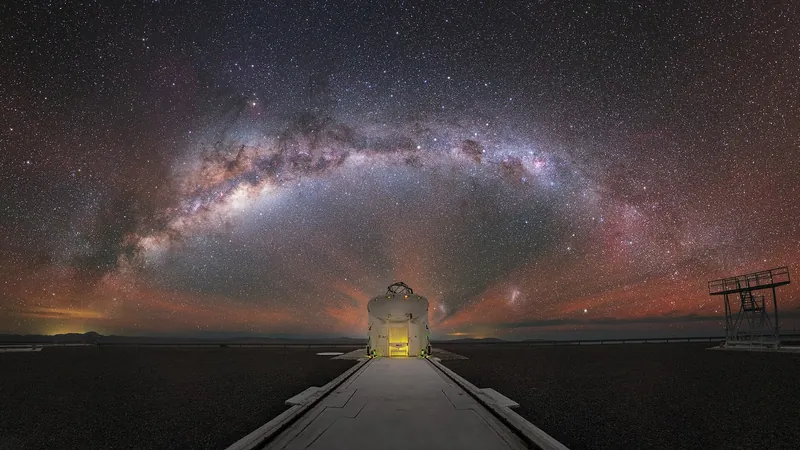
The black hole at the heart of the Milky Way
Four million Suns’ worth of mass, in a space no bigger than our solar system.
How this site works. Every fact is in our own words and linked to its source, beside it. Where good sources disagree, we show each version in a “Sources differ” box.
Our black hole
The supermassive black hole at the centre of the Milky Way is called Sagittarius A*, said “ay-star”. NASA
It has about 4 million times the mass of the Sun. NASA
That is relatively small compared with the black holes in some other galaxies. NASA, types
How far away is it? Sources differ
- A NASA article puts Earth about 26,000 light-years from the Milky Way’s black hole. NASA, 10 questions
- ESO’s 2022 press release says it is about 27,000 light-years from Earth. ESO, 2022
Both are round numbers from very good sources. The difference is less than four per cent.
There is no danger of Earth being pulled in. NASA, 10 questions
It has probably already swallowed most or all of the stars that formed near it. NASA, 10 questions
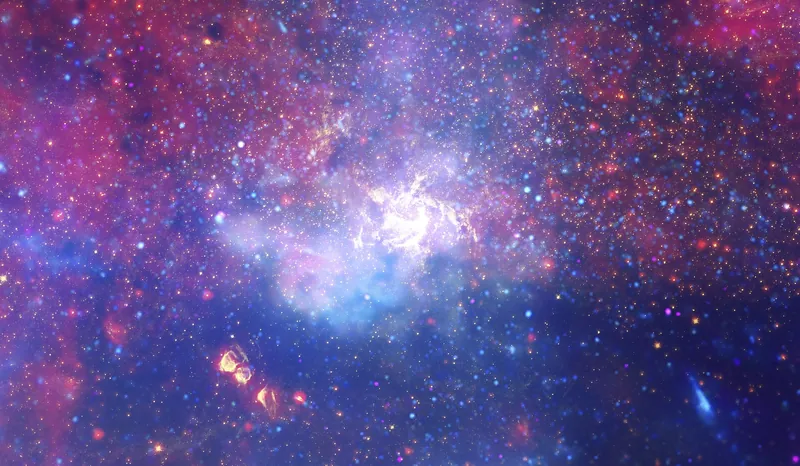
Weighing it with stars
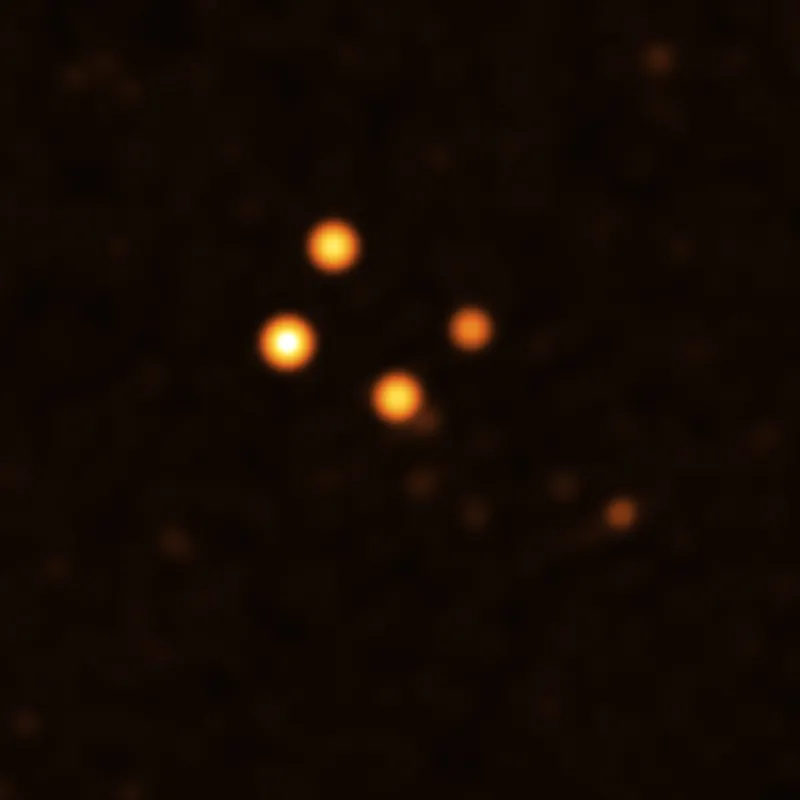
From the early 1990s, Reinhard Genzel and Andrea Ghez each led a team that mapped the orbits of the brightest stars near the centre of our galaxy. Nobel Prize, 2020
To see through the dust they used the world’s largest telescopes and new ways to correct for the blurring caused by Earth’s atmosphere. Nobel Prize, 2020
Both teams found an extremely heavy, invisible object: around four million solar masses packed into a region no larger than our solar system. Nobel Prize, 2020
The Nobel committee said a supermassive black hole is the only explanation currently known. Nobel Prize, 2020
The Nobel Prize, 2020
Genzel and Ghez shared half of the 2020 Nobel Prize in Physics “for the discovery of a supermassive compact object at the centre of our galaxy”. Nobel Prize, 2020
Andrea Ghez was born in New York City in 1965 and is a professor at the University of California, Los Angeles. Nobel Prize, 2020
Reinhard Genzel was born in 1952 in Bad Homburg vor der Höhe, Germany. Nobel Prize, 2020
Britannica gives Sagittarius A* a mass equivalent to more than 4,000,000 Suns. Britannica
The picture
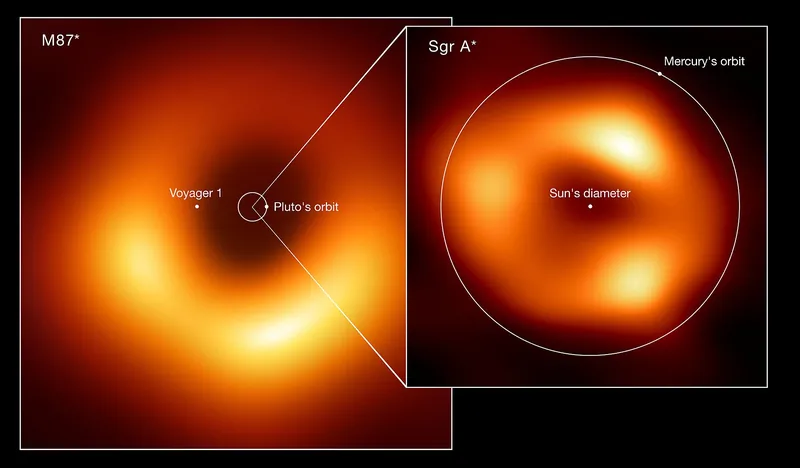
On 12 May 2022 astronomers unveiled the first image of Sagittarius A*, made by the Event Horizon Telescope. ESO, 2022
The telescopes observed it on several nights in 2017, collecting data for hours at a time, like a long exposure on a camera. ESO, 2022
From Earth it looks about as big in the sky as a doughnut would on the Moon. ESO, 2022
Gas takes days to weeks to circle M87*, but only minutes to circle Sagittarius A*, so its glow kept changing while the telescopes watched: “a bit like trying to take a clear picture of a puppy quickly chasing its tail”. ESO, 2022
The published picture is an average of the different images the team extracted. ESO, 2022
More than 300 researchers from 80 institutes worked on it, rigorously, for five years. ESO, 2022
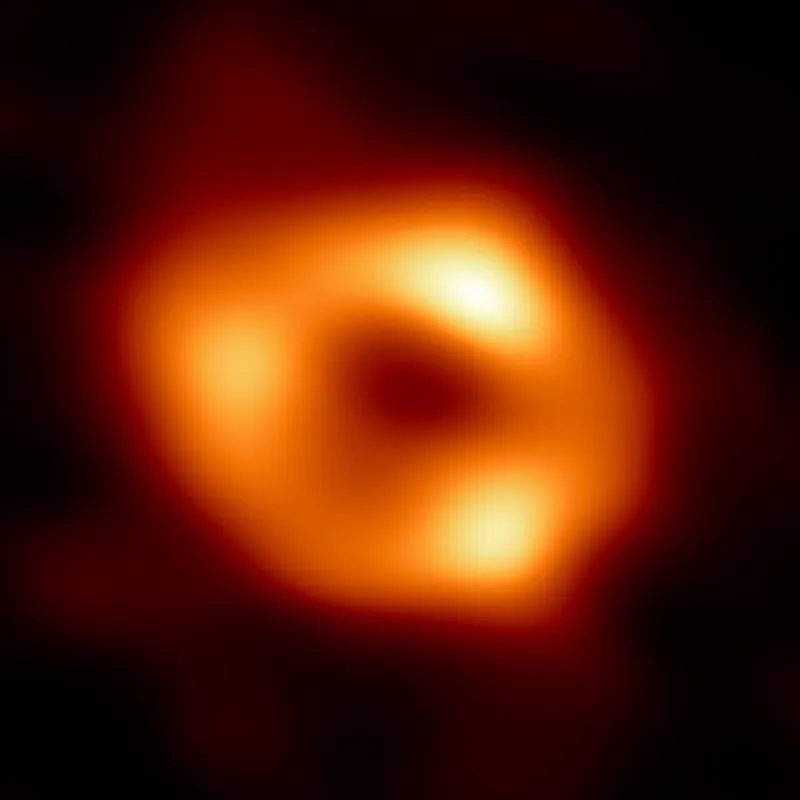
The two pictured black holes look remarkably similar, even though ours is more than a thousand times smaller and less massive than M87*. ESO, 2022
The size of the ring agreed closely with the predictions of Einstein’s general relativity. ESO, 2022
Flickers and flares
NASA’s James Webb Space Telescope has seen bright flares and fainter flickers from Sagittarius A*. The flickers are so quick they must come from very close to the black hole. NASA